Company: Amazon — Amazon Flex (8 countries)
Role: UX Designer II
Scope: Amazon's Flex recruiting and onboarding redesign
I led the redesign of Amazon Flex’s recruiting and onboarding experience — a high-volume acquisition engine used across eight countries.
The experience operated on legacy web architecture tightly coupled to backend verification systems. Major structural changes were out of scope.
My goal was to improve onboarding yield by reducing uncertainty and increasing clarity — without breaking the existing system.
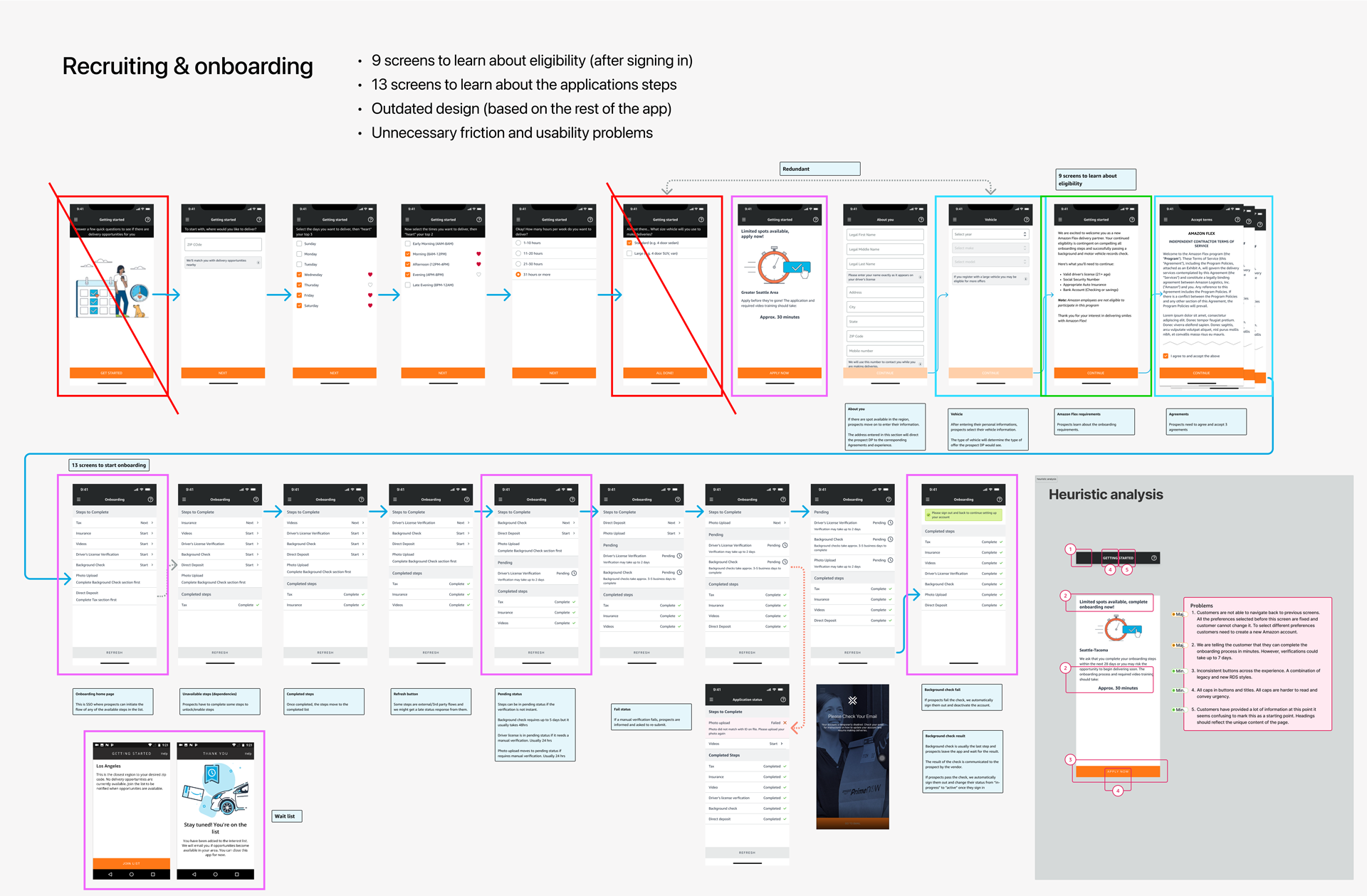
In the US, only 16% of applicants who started onboarding delivered a block within 30 days of activation. One-third of applicants got stuck during onboarding, and of those who completed it, more than half never delivered.
Low yield meant higher marketing spend to maintain driver supply. The funnel was inefficient.
This was not just a UX issue. It was an acquisition economics problem.
Core Pain Points
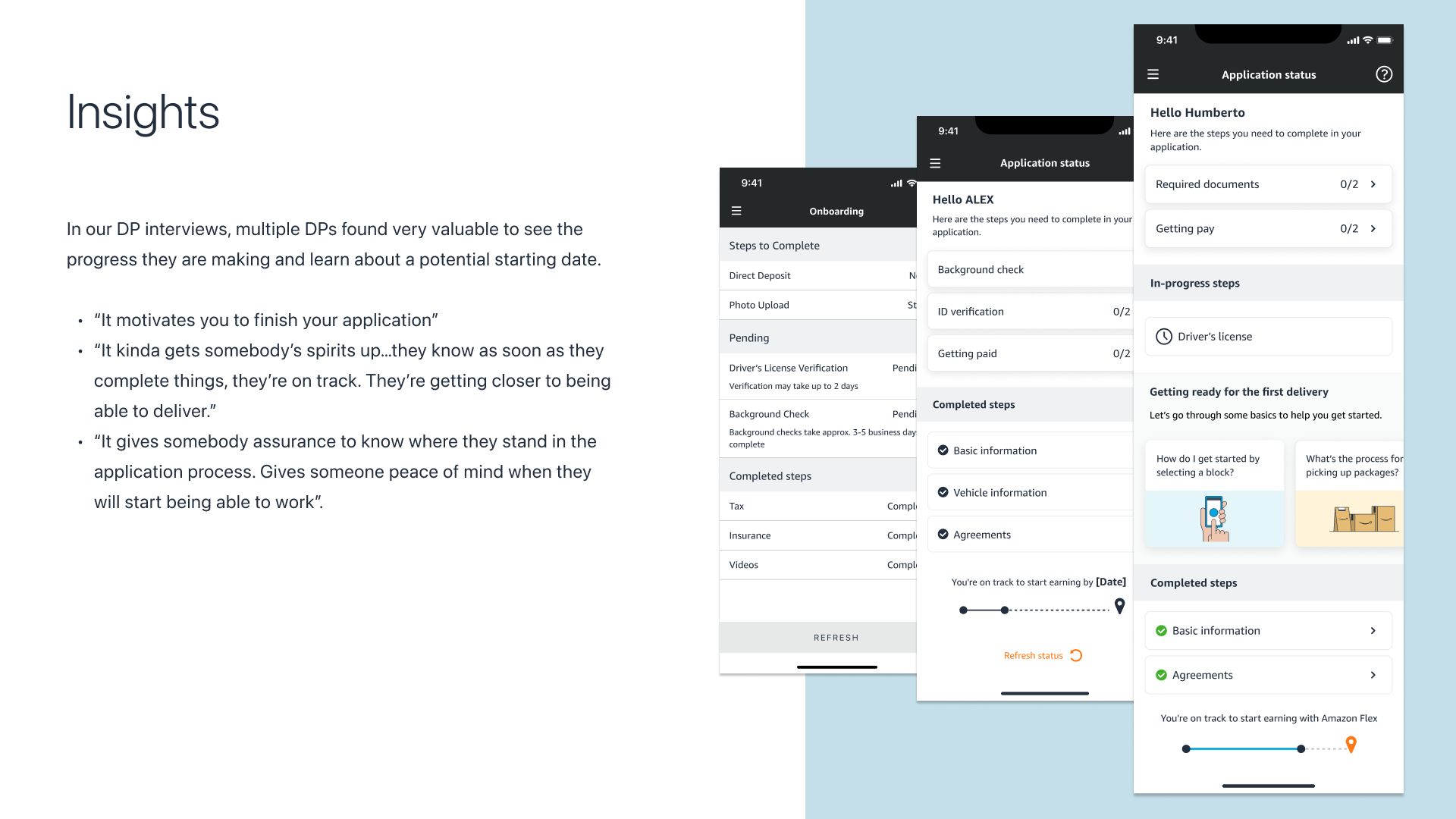
Applicants were not asking, “What task is next?” They were asking, “When can I start earning?”
Research showed that the issue was not individual screen usability. The issue was mental modelling. Applicants struggled to understand progress toward earning.
The core insight: onboarding was framed as completing tasks, but applicants experienced it as waiting.
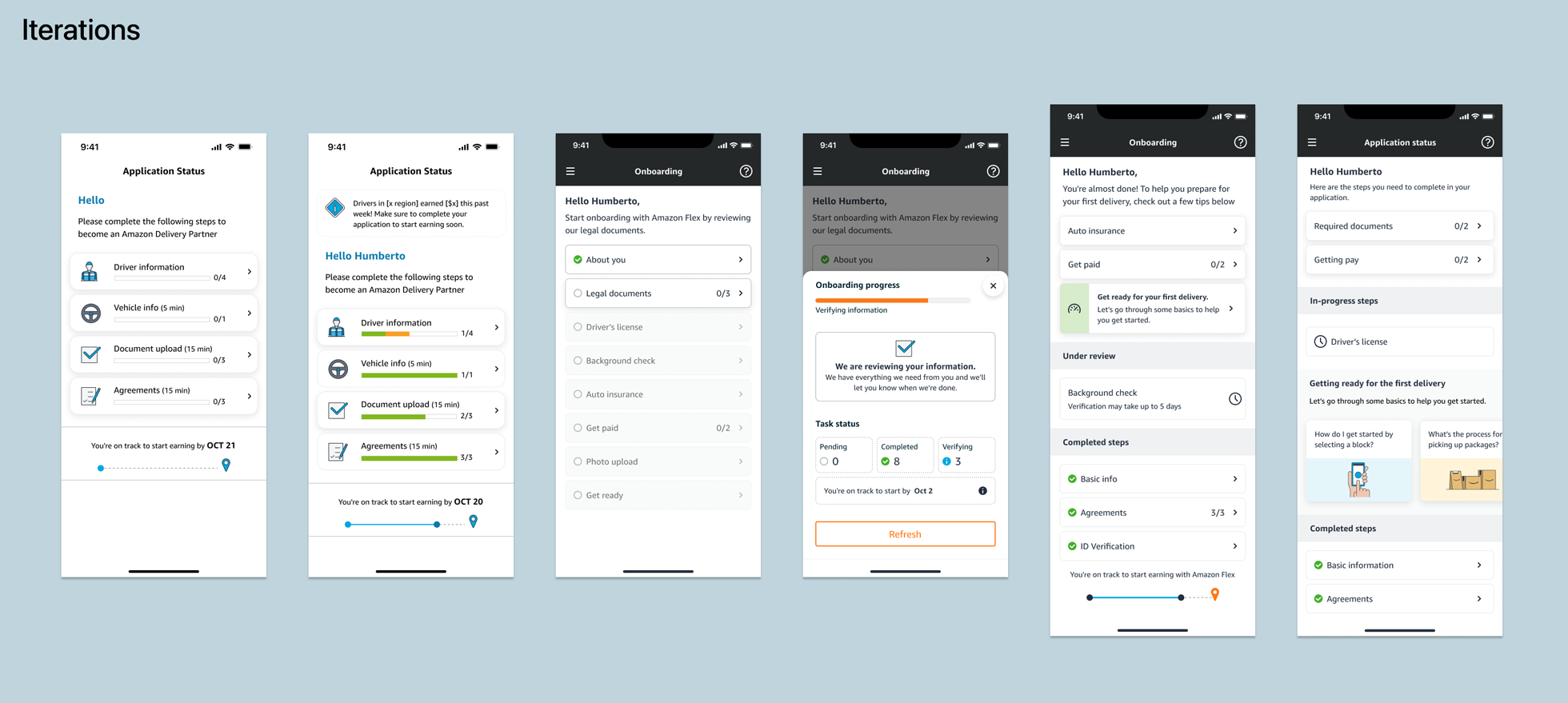
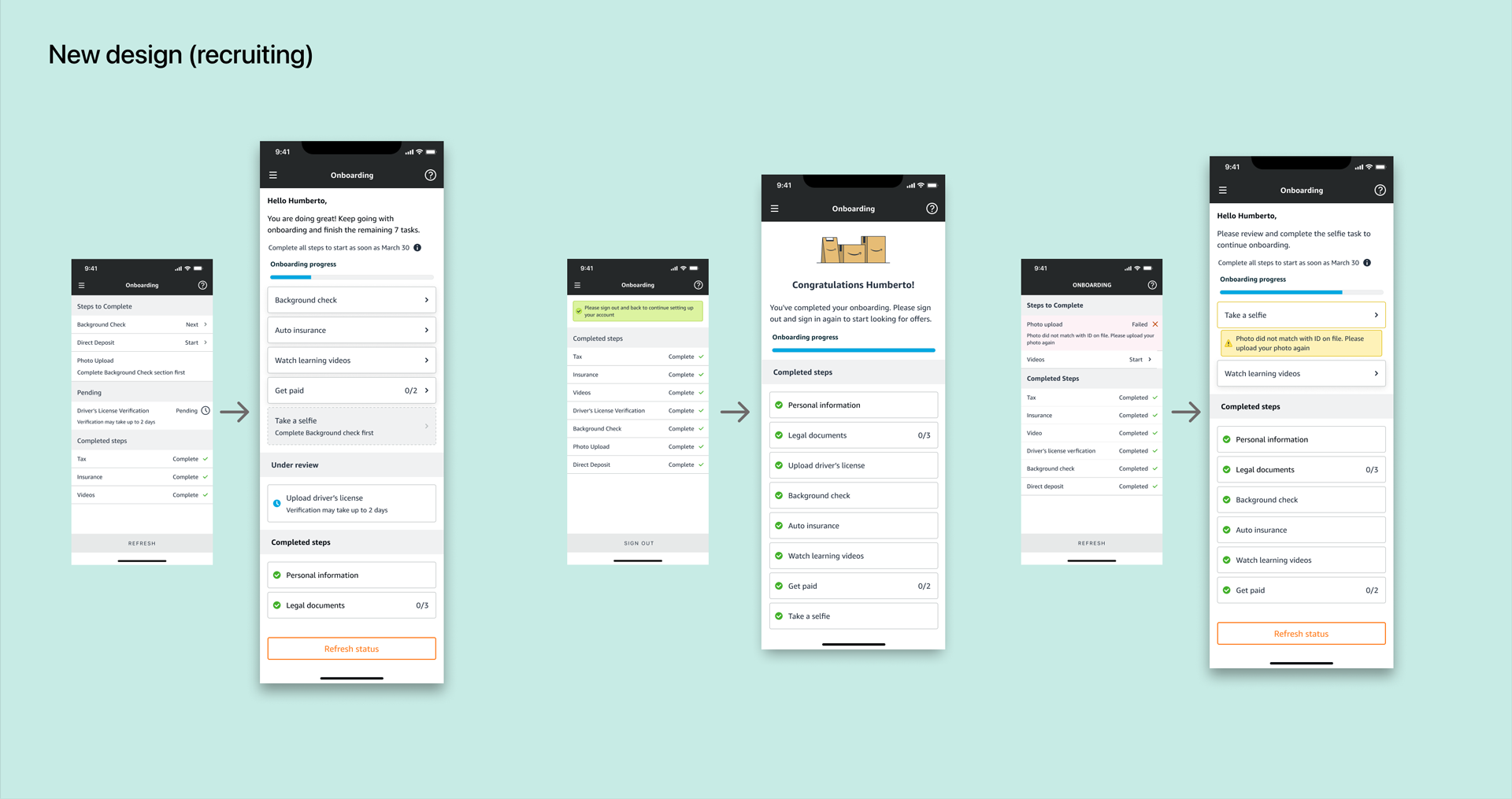
I explored multiple concepts, including progress trackers and estimated start date messaging. Through usability testing, I learned that complex progress systems increased cognitive load but had a positive sentiment impact.
Clarity came from simplifying — not adding more UI.
Shift the Mental Model
Reframed onboarding from:
“Complete tasks to join” to“Progress toward your first earning.”
This strategy focused on three principles:
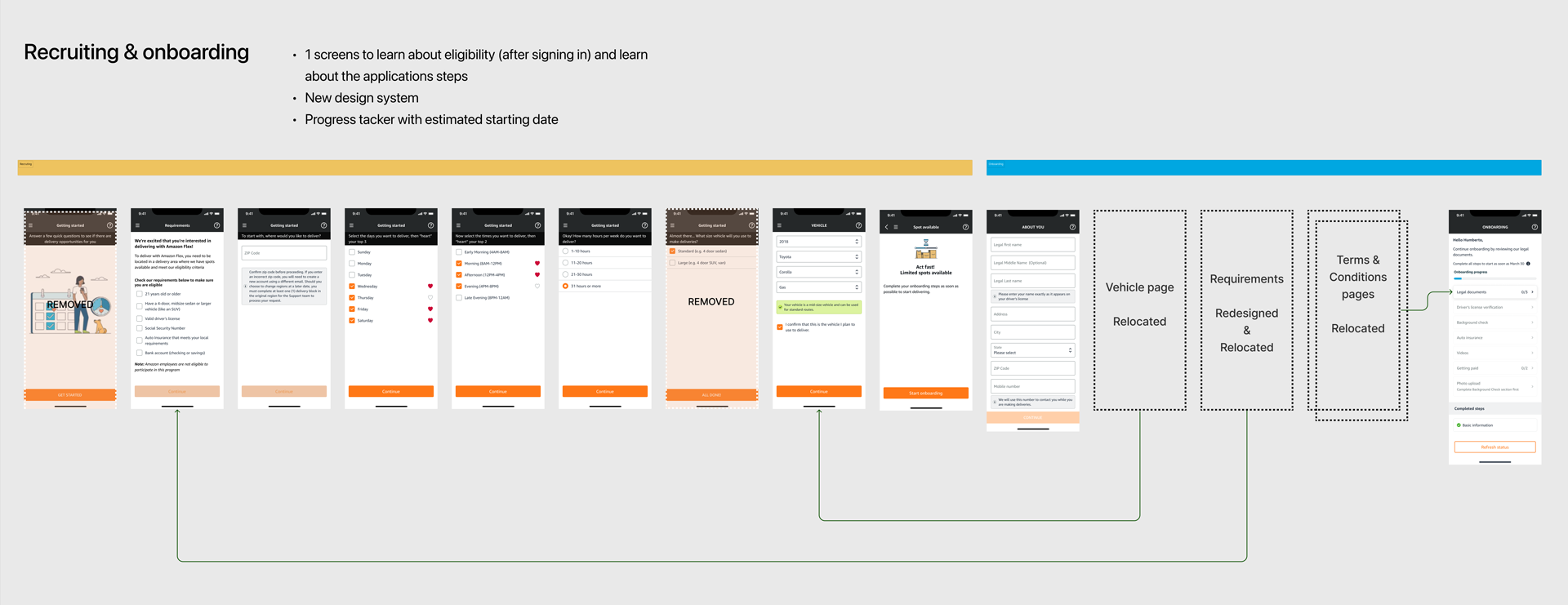
To balance delivery timelines with long-term product quality, we created two main approaches.
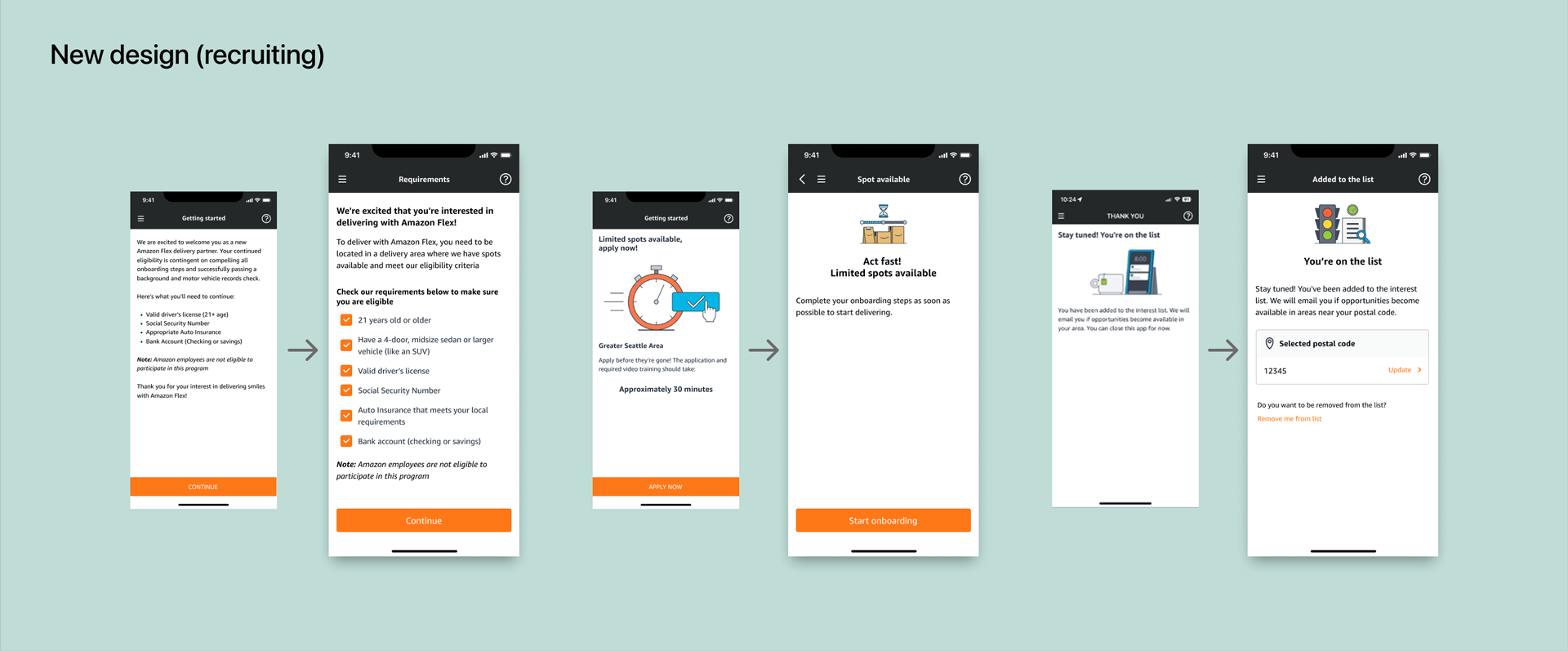
Evolutionary approach (Shipped)
This work shipped on schedule and improved yield immediately.
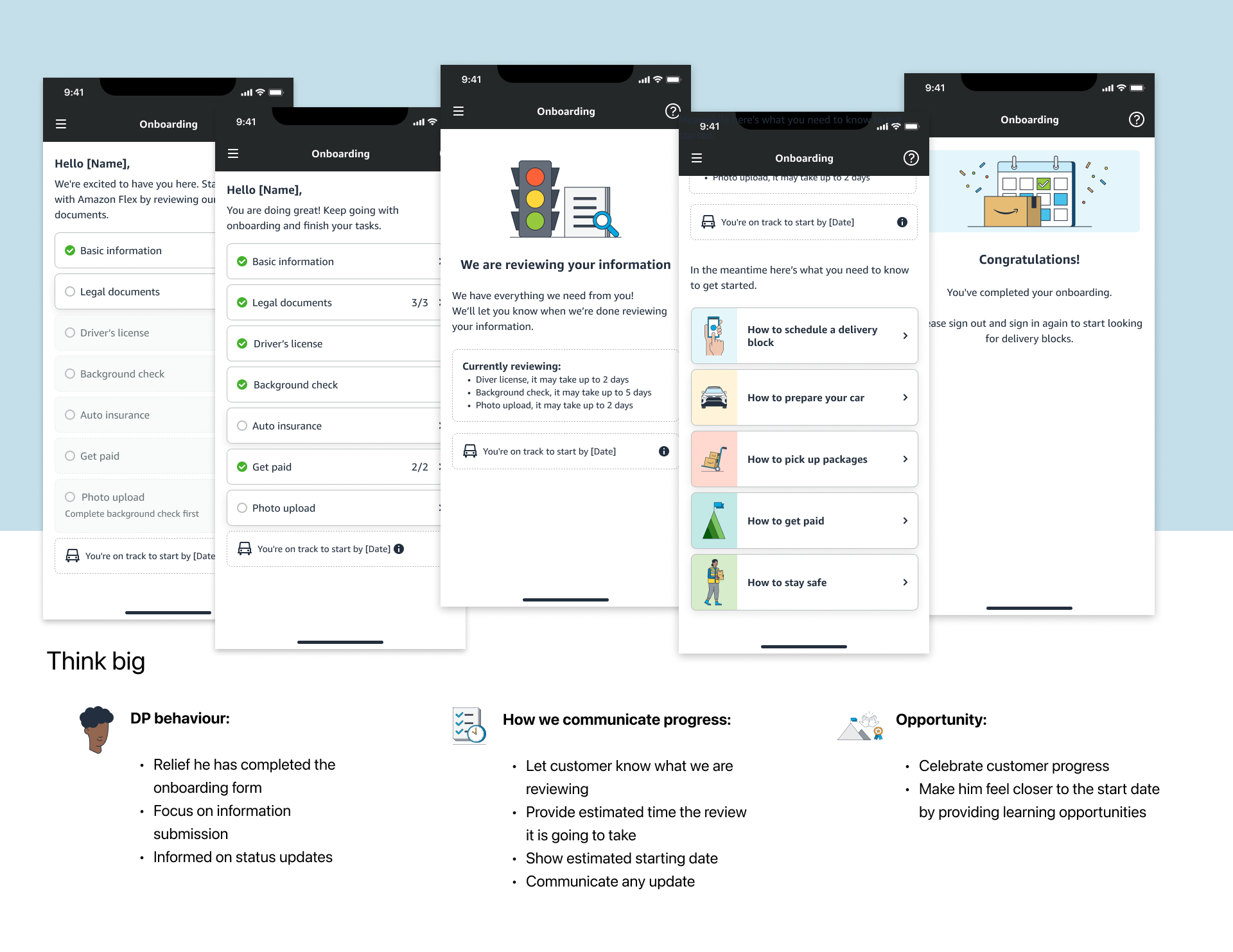
Think big changes approach
I also advocated for a larger architectural redesign, separating onboarding into three phases:
While it could not be implemented immediately due to system constraints, it aligned stakeholders around a long-term direction.
Delivered a clearer, more predictable onboarding experience within existing constraints:
In parallel, I defined a scalable onboarding framework to guide future iterations and improvements.
Experience Improvements
Moving program requirements earlier increased completion by ~2% while reducing unnecessary funnel entry.
The impact scaled significantly.
In 2023, over 650,000 individuals were onboarded across eight countries. We delivered 21 improvements worldwide and increased onboarding completion by more than 750 basis points year-over-year. We also launched Single Session Onboarding in Japan, Australia, the UK, and India.
In 2024, during high-season recruiting (Oct–Nov), over 140,000 individuals were onboarded across eight countries. We delivered 19 additional improvements, increased onboarding completion by 541 basis points year-over-year, achieved over 60% onboarding yield in the US during peak, and reduced aging accounts in the funnel by more than 85%.
The structural clarity introduced in this redesign had a positive impact on achieving these multi-year performance gains.
I shipped what was feasible while aligning product and engineering around the long-term North Star.
The alternative proposal did not block delivery. Instead, it created shared direction and informed onboarding improvements across the US, UK, Japan, Australia, Brazil, and India.
The work shifted onboarding from a checklist mindset to a predictable earning journey — influencing how the team thinks about acquisition.